
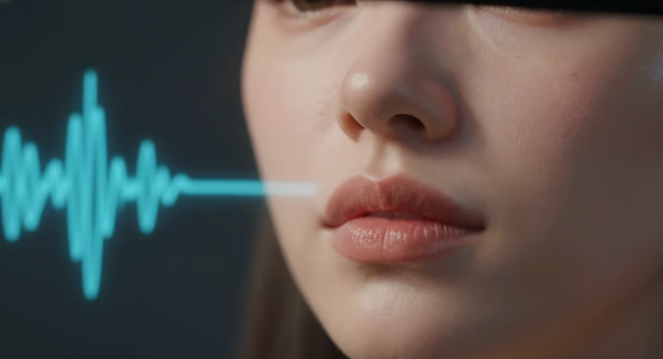
The global digital media landscape has evolved at an extraordinary pace, raising audience expectations for pristine, professional-grade video content. Whether you are an independent filmmaker putting together a narrative short, a social media marketer localizing a campaign for international viewers, or a brand manager bringing a virtual persona to life, clunky audio-visual synchronization instantly breaks immersion and kills viewer retention.
Historically, matching spoken dialogue tracks to a subject’s mouth movements required specialized visual effects artists, expensive desktop software workstations, and grueling hours of manual keyframing. Today, generative artificial intelligence has completely transformed this workflow. By utilizing a high-performance ai lip sync utility, creators can precisely map any audio file to a subject’s facial expressions in mere seconds, all directly within a standard web browser.
Even so, the market is heavily flooded with basic novelty apps that produce jittery warping, robotic mouth timing, and muddy skin textures. Serious digital professionals require temporal consistency, accurate phonetic matching, and a unified editing environment. Below is our definitive ranking of the top synchronization tools dominating the industry this year.
At a Glance
| Tool | Best For | Key Advantage | Starting Price |
| Magic Hour | Comprehensive AI Media & Sync | Multi-model aggregation, non-expiring credits, and automated workflows | Free / $10–$15 mo |
| HeyGen | Corporate Avatars | Extensive catalog of pre-built professional business presenters | Free tier / Paid |
| ElevenLabs | Voice Cloning & Dubbing | Exceptional emotional realism in voice generation and duplication | Free tier / Paid |
| Synthesia | Multi-Lingual Localization | Slide-deck integration for enterprise training across 120+ languages | Free tier / Paid |
| Runway (Gen-4.5) | Cinematic Filmmakers | Advanced camera choreography and audio-driven scene integration | Free tier / Paid |
Magic Hour and Other Tools Explanations
Finding the right digital utility depends heavily on your production pipeline. Comprehensive environments like Magic Hour stand out by combining best-in-class face swapping, dialogue synchronization, and talking portraits with multi-step automated video pipelines inside a single dashboard. Meanwhile, specialized platforms like ElevenLabs focus heavily on voice cloning and cross-lingual audio translation.
For corporate communications, enterprise tools like HeyGen and Synthesia provide structured talking-head modules, while advanced visual artists turn to systems like Runway (Gen-4.5) for deep narrative scene design.
Tool Breakdown Sections
1. Magic Hour: The Ultimate All-in-One AI Media Studio
Taking the undisputed number one position for 2026 is Magic Hour. While the vast majority of platforms trap users inside isolated, single-purpose workflows—forcing you to generate a clip on one site, upscale it on a second, and attempt to sync audio on a third—Magic Hour entirely rewrites the digital production playbook. It operates as a fully integrated, comprehensive browser-based creative ecosystem.
Key Differentiators & Standout Features:
- Specialized Creative Modules: Delivers industry-leading face swapping, dialogue matching, and talking photos that preserve skin textures and micro-expressions during rapid speech.
- Multi-Model Hub & Parallel Queues: Aggregates top artificial intelligence engines in one location. It permits parallel generations without concurrency caps, letting you test multiple creative takes simultaneously.
- Automated Multi-Step Pipelines: Utilize click-to-create templates to generate, upscale, and align video components in one continuous action.
- Non-Expiring Credits & Frictionless Entry: Test features immediately with zero initial signup required. Unused credits roll over indefinitely rather than disappearing at the end of the billing cycle.
- Enterprise Infrastructure: Fully optimized for desktop and mobile web use with weekly software patches, fast founder support, and full API integration capabilities.
Transparent Pricing Overview:
- Free Plan: Complimentary non-expiring credits with no credit card necessary.
- Creator Plan: $15/month or an optimized $10/month when billed annually.
- Pro Plan: $39/month (or $25/month billed annually) for higher resolution outputs (1472px) and priority processing queues.
- Business Plan: $99/month (or $66/month billed annually) built for heavy studio pipelines, 4K outputs, and unlimited concurrency.
- Verdict: The premier choice for independent producers who want to manage facial animation, syncing, and video rendering under one roof. To see how these tools compare with legacy setups, check out the insights on best AI lip sync tools.
2. HeyGen
HeyGen is tailored heavily toward corporate marketing teams and digital educators. Rather than focusing on artistic filmmaking, it provides clean, business-ready virtual presenters for training modules and commercial pitches.
- Pros: Generates professional talking heads from simple text input using a vast catalog of diverse stock presenters.
- Cons: Lacks the extensive artistic customizability and multi-step media pipelines found in full-stack options like Magic Hour.
- Verdict: A solid utility for business presentations and corporate explainers.
- Pricing: Free tier / Paid options.
3. ElevenLabs
Renowned primarily as a pioneer in digital voice creation, ElevenLabs also provides robust audio dubbing and voice replication features for video projects.
- Pros: Delivers exceptional emotional realism in generated speech, making it ideal for multi-language voiceovers.
- Cons: Operates mainly as an audio engine rather than a complete visual editor, offering fewer image-to-video tools.
- Verdict: Exceptional for voice duplication and audio localization work.
- Pricing: Free tier / Paid options.
4. Synthesia
Synthesia serves as a major platform for internal enterprise communications, letting teams produce slide-driven video briefings at scale.
- Pros: Streamlines corporate compliance training with native translation support across over 120 languages.
- Cons: Avatars can appear rigid, and the platform does not support importing arbitrary personal photos for custom animation.
- Verdict: A reliable option for global enterprise onboarding campaigns.
- Pricing: Free tier / Paid options.
5. Runway (Gen-4.5)
Runway remains popular among independent directors and visual effects artists who need advanced environmental controls and generative physics.
- Pros: Provides deep camera choreography tools and seamless audio integration within complex cinematic shots.
- Cons: Features a steeper learning curve and stricter monthly credit structures that may slow down rapid social media workflows.
- Verdict: Best suited for high-end cinematic art and experimental VFX projects.
- Pricing: Free tier / Paid options.
Market Trends in AI Lip Sync (2026)
- Mass Global Localization: Creators are pushing far beyond basic subtitling. Modern tools enable full voice cloning across multiple languages while morphing a speaker’s mouth movements to fit foreign phonetic structures seamlessly.
- Consolidated Browser Suites: The industry is moving away from isolated, single-task applications. Professionals favor centralized dashboards that manage generation, upscaling, and audio alignment under one roof.
- Fairer Creator Economics: High-pressure monthly quotas with strict use-it-or-lose-it policies are losing traction against flexible systems featuring permanent credit rollover and accessible trial tiers.
How We Chose These Tools
To identify the most effective video-audio alignment platforms, our evaluation focused on specific technical benchmarks:
- Phoneme & Viseme Precision: How accurately visual mouth shapes match spoken consonants and vowels without visible lag.
- Facial Preservation: Whether the software protects natural skin tones, lighting gradients, and micro-expressions without blurring the jawline.
- Pipeline Automation: The inclusion of automated multi-step sequences (such as generation directly to upscaling) to eliminate tedious file exporting.
- Pricing Value: The generosity of trial editions, credit expiration policies, and overall cost transparency.
Frequently Asked Questions (FAQs)
How does artificial intelligence handle audio synchronization?
Advanced machine learning models break down uploaded audio tracks into phonetic sound parts (phonemes). The system then maps those acoustic points onto the visual mouth shapes (visemes) of the character, seamlessly shifting surrounding face pixels frame by frame to simulate natural speech.
Why should I choose an all-in-one platform over isolated apps?
Jumping between separate websites for generation, resolution upscaling, and audio alignment wastes valuable hours on file transfers. A unified dashboard streamlines your production pipeline and prevents unnecessary subscription overhead.
Do I need a high-end graphics computer to run these programs?
No. Because heavy machine-learning calculations process entirely on remote cloud server farms, you can operate these creative tools smoothly on standard laptops, tablets, or mobile web browsers.
Are these AI-generated videos cleared for commercial marketing work?
Yes, provided you operate on paid subscription tiers of reputable software providers which typically grant full commercial usage rights. Always verify that you possess the proper permissions for any base likenesses or voice assets utilized in your campaigns.
Conclusion
Advanced generative technology has permanently removed the technical bottlenecks that once kept professional video dubbing locked inside expensive post-production houses. Modern tools allow digital creators to produce perfectly synchronized video content directly through an internet browser.
By combining workflow flexibility, non-expiring credit structures, and powerful multi-model engines, platforms like Magic Hour offer the ideal ecosystem for creators aiming to scale their digital output efficiently this year.