
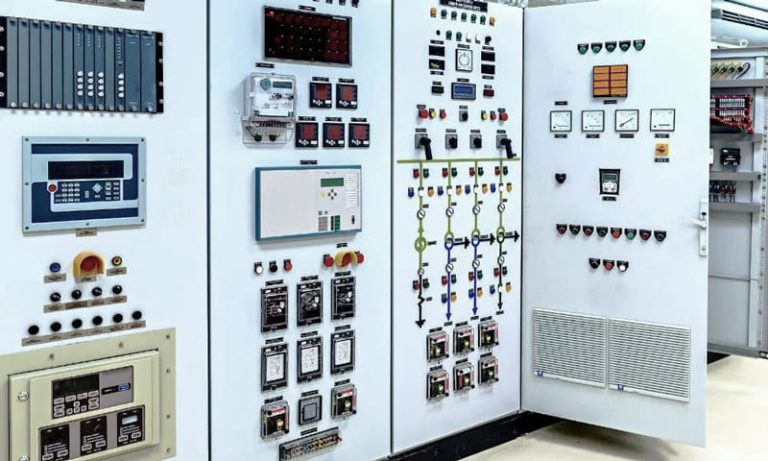
Modern facilities now handle manufacturing, equipment, energy consumption, and daily operations in a completely different manner thanks to industrial automation. Businesses are searching for solutions that provide more control and insight without adding needless complexity as technology develops. Because they link equipment, monitor processes, and assist operators in making smarter choices, smart control panels are becoming a crucial component of this shift.
Modern Control Panels may include sophisticated controllers, sensors, digital interfaces, and communication technologies, in contrast to conventional systems that mostly depended on manual switches and simple indications. This connection offers operators more accessible methods to handle equipment and processes while also giving them a better view of what is occurring across them.
Increasing Industrial Operations’ Intelligence
The capacity to continually gather and interpret operational data is one of the most significant advancements brought about by smart control technology. Important conditions may be monitored from a central location thanks to the ability of sensors placed across a facility to interact with control systems.
This information may be used by operators to determine the state of the equipment, spot anomalous operating circumstances, and make any required modifications. Teams may see how equipment and systems are operating early rather than relying only on planned inspections or waiting for a clear issue.
Industrial activities may become more responsive as a result of this increased awareness. Decisions may be made based on actual operational circumstances rather than presumptions or out-of-date records when information is easily accessible.
Making Complicated Automation Systems Simpler
Numerous interrelated devices and processes are often seen in industrial settings. It may become challenging to manage each component independently, especially as facilities grow or incorporate more automated equipment.
By combining crucial control tasks, solutions like Control 30 panels may provide a more structured approach to system administration. Operators may find it simpler to keep an eye on various aspects of an industrial process with centralised control rather than frequently switching between multiple platforms.
Additionally, a well-structured interface helps speed up workers’ comprehension of system situations. Finding crucial information takes less time when there are clear displays, warnings, and control choices. This is especially helpful in operations where quick reactions may help prevent disruptions from growing into more serious issues.
Encouraging Preventive Maintenance
Fixed timetables have always been a major component of maintenance. Scheduled maintenance is still crucial, but smart automation gives companies more data that might help them adopt a more proactive maintenance plan.
Temperature variations, equipment running time, performance trends, and system alarms are just a few of the variables that control systems may monitor. This data may be examined by maintenance teams to spot indicators that a component could need maintenance.
Early resolution of possible problems helps minimise unplanned equipment disruptions. Additionally, it may help maintenance teams prioritise tasks based on the real state of the system. Instead of addressing every component in the same manner, resources may be focused on equipment that needs maintenance.
Enhancing The Management Of Energy
For industrial buildings, energy efficiency has grown in importance. Businesses may make operational changes by using automated controls to determine when and where energy is being used.
Equipment may be coordinated by smart systems so that it only runs when needed rather than continuously. Additionally, they may provide data that aids teams in spotting ineffective operational trends.
Automation equipment’s physical surroundings are also crucial. Steel Insulated Panels may help create regulated industrial environments where energy efficiency and temperature control are crucial factors. A more thorough approach to facility performance may be supported by integrating intelligent automation with efficient building systems.
Smarter Industrial Automation’s Future
Industrial automation is moving toward more responsive, flexible, and networked systems thanks to smart control technologies. Turning equipment on and off is just one aspect of the value. Monitoring, maintenance scheduling, energy management, system integration, and operational visibility are all supported by contemporary control systems.
Control systems will continue to be essential for coordinating the use of intelligent technologies and linked devices in industrial operations. Companies may construct processes that are simpler to manage and better equipped for future changes by combining dependable infrastructure with careful automation design.
In the end, smart control panels signify a move toward industrial settings where control and information coexist. These solutions are contributing to the development of a more intelligent approach to industrial automation by offering facilities more flexibility and operators more insight.