
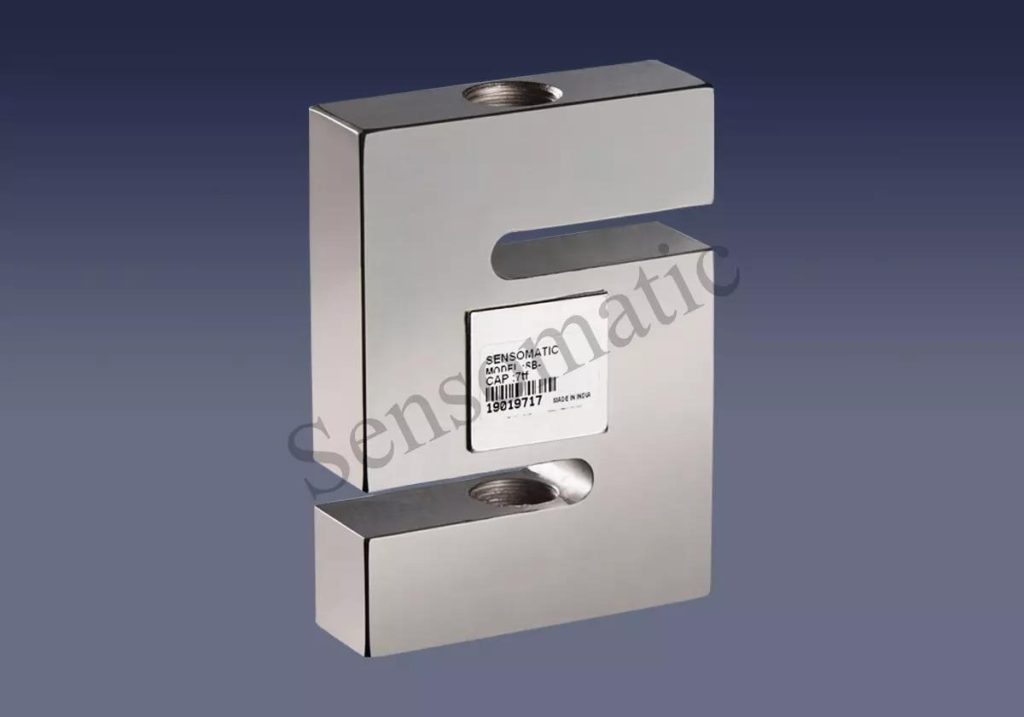
What is an S-Type Load Cell?
An S-type load cell is a force sensor designed to measure both tension and compression using an inline mounting configuration with threaded ends. It provides accurate, stable readings in applications where force direction changes or acts vertically.
When to Use a Tension Compression Load Cell: Why S-Type Is the Right Choice
The answer is direct: choose a tension compression load cell when your application requires accurate measurement in both tension and compression from a single inline device, particularly in hanging scale measurement, crane systems, and tensile test rigs. No beam cell performs equivalently in these conditions.
After 14 years specifying and commissioning load cells across crane overload protection systems, materials testing laboratories, and conveyor force monitoring, I have replaced more shear beam installations that were wrong for the job than I care to count. The S-type earns its price premium in specific, well-defined scenarios. This guide explains exactly where it fits, why the geometry matters, and why beam cells fail in these roles.
The Problem Beam Cells Cannot Solve
Shear beam and bending beam load cells are designed for platform weighing, compression-only, bottom-supported, horizontal surfaces. They perform well in those conditions.
The problem begins when engineers try to use them as a tension compression load cell substitute. In vertical, inline, or bi-directional load paths, beam cells introduce bending moments they were never designed to handle. The result is non-linear output, increased hysteresis, and frequent recalibration.
For crane engineers and automation teams, this becomes a reliability issue. For testing labs, it becomes a data integrity problem.
Using the wrong load cell for your application can lead to inaccurate readings and frequent recalibration.
Get the right recommendation for your setup → https://sensomatic.co/load-cell/
S Type Load Cell Working: Why Geometry Matters
Understanding S type load cell working is key to understanding why it outperforms beam cells.
The S-type load cell uses an S-shaped body with threaded connections at both ends. This enables:
- True axial load transfer (force flows straight through the sensor)
- Measurement through dual shear bridges
- Accurate response to both tension and compression forces
Unlike beam cells, which rely on bending, S-type cells measure shear strain. This is inherently more stable under dynamic and off-axis conditions.
Result:
- Consistent accuracy: ±0.03% to ±0.1%
- Reliable output under fluctuating loads
- Equal sensitivity in both tension and compression
For applications requiring a tension compression load cell, this geometry is not optional, it is fundamental.
S-Type Load Cell Applications
S-type load cells are used in industries where force acts inline or changes direction:
- Crane systems and overload protection
- Hanging scale measurement
- Materials testing machines (tension and compression)
- Automation and inline force monitoring
- Hopper and suspended tank weighing
- Cable tension measurement systems
Where S-Type Outperforms: Real Engineering Scenarios
1. Hanging Scale Measurement and Crane Systems
In hanging scale measurement, loads are rarely static. They swing, accelerate, and introduce lateral forces.
Beam cells fail here because:
- They are not inline
- They experience bending stress
- Accuracy degrades rapidly
S-type load cells:
- Mount directly inline with hooks or chains
- Handle dynamic loads without distortion
- Maintain calibration stability
In crane overload protection systems, this difference is critical. Measurement error dropping from double digits to sub-1% is common after switching to an S-type.
2. Testing Labs: Tensile and Compression Applications
Testing labs require precise force measurement across full load cycles.
S-type advantages:
- Measures both pull and push without recalibration
- Maintains linearity across load reversal
- Supports high-cycle fatigue testing
Beam cells introduce:
- Non-linear response under tension
- Data inconsistency
- Invalid test results
For materials testing, S-type is not just preferred, it is required.
3. Automation and Inline Force Measurement
Automation systems often require real-time force monitoring in cables, chains, or web materials.
S-type load cells:
- Install inline with no custom brackets
- Provide stable output under vibration
- Reduce mechanical complexity
Beam cells:
- Require fabricated mounts
- Introduce multiple failure points
- Increase maintenance costs
S-Type vs Shear Beam Load Cell
| Parameter | S-Type Load Cell | Shear Beam Load Cell |
| Function | Tension + Compression | Compression only |
| Mounting | Inline | Platform-based |
| Dynamic Loads | Stable | Accuracy degrades |
| Installation | Simple | Requires structure |
| Best Use | Hanging scales, testing, automation | Platform weighing |
Key insight:
If your load path is vertical, dynamic, or bi-directional, a shear beam is the wrong engineering choice.
Real-World Failure Case
A packaging plant attempted to monitor bag tension using a shear beam load cell mounted with fabricated brackets.
Initial results:
- Acceptable calibration at low load
- Significant drift under production speed
After 3 months:
- 12–18% measurement error
- Frequent recalibration downtime
Switching to an S-type load cell:
- Error reduced to <1%
- Calibration stabilized
- Maintenance reduced by over 60%
This is a common pattern when beam cells are misapplied in inline force measurement.
Key Selection Insight for Engineers
The most common mistake is selecting based only on load capacity.
Correct approach:
- Include dynamic load factors (1.5× to 3×)
- Apply safety margins
- Verify bi-directional rating
Underspecification leads to:
- Calibration drift
- Reduced lifespan
- Increased maintenance cost
Installation Factors That Affect Accuracy
Even the best S-type load cell will fail if installed incorrectly.
Critical points:
- Alignment: keep load axial (≤3° deviation)
- Thread engagement: minimum 1.5× diameter
- Torque control: avoid preloading the sensor
- Cable management: prevent twisting in hanging setups
Common Misconceptions
“Beam cells can replace tension compression load cells.”
No. They cannot handle true bi-directional inline loading.
“S-type load cells are less accurate.”
Only in static lab conditions. In real-world dynamic use, they are more accurate.
“Brackets can simulate inline measurement.”
They introduce bending, reduce accuracy, and create maintenance issues.
FAQ Section
What is the working principle of an S-type load cell?
It works on shear strain measurement using strain gauges placed on an S-shaped body, allowing accurate detection of both tension and compression forces.
Can an S-type load cell measure both tension and compression?
Yes, it is specifically designed for bi-directional force measurement.
Where are S-type load cells used?
They are commonly used in crane systems, hanging scales, testing machines, and automation systems.
What is the difference between S-type and shear beam load cells?
S-type load cells measure tension and compression inline, while shear beam load cells are designed for compression-only platform applications.
Final Recommendation
If your system involves tension, compression, or dynamic loads, using the wrong load cell will cost you accuracy and maintenance time.
Get a quick recommendation from our engineers and choose the right sensor the first time:
👉 https://sensomatic.co/load-cell/